Αρχειοθήκη ιστολογίου

Αναζήτηση αυτού του ιστολογίου

Κυριακή 8 Ιανουαρίου 2023

Effect of sintering on the translucency of CAD‐CAM lithium disilicate restorations: a comparative in vitro study

alexandrossfakianakis shared this article with you from Inoreader

Abstract

Purpose

The available independent data on the translucency of novel pre and fully sintered chair-side computer-aided design and computer-aided manufacturing (CAD-CAM) lithium disilicate are limited. This comparative in vitro study evaluated the translucency degree of pre and fully sintered chairside CAD-CAM lithium disilicate crowns after optional, required, and additional firing processes.

Materials and Methods

One hundred and five maxillary left central incisor crowns manufactured by three different CAD-CAM lithium disilicate brands shade A1 were assigned into 7 groups as follows (n = 15): (1) n!ce Straumann without sintering; (2) n!ce Straumann with one additional sintering process; (3) n!ce Straumann with two additional sintering processes; (4) Amber Mill with one sintering process; (5) Amber Mill with two sintering processes; (6) IPS e.max CAD with one sintering process; (7) IPS e.max CAD with two sintering processes. The translucency of all crowns was evaluated with a color imaging spectrophotometer. All statistical analyses were performed using statistical software. A standard level of significance was set at α < 0.05.

Results

All the milled crowns presented different degrees of translucency, and additional sintering processes altered it. IPS E.max CAD with two (4.33 ± 0.26) and one (4.01 ± 0.15) sintering processes displayed the highest translucency, whereas n!ce Straumann with no sintering process provided the lowest value (2.82 ± 0.16).

Conclusions

The translucency of chairside lithium disilicate single-unit full-coverage restorations manufactured with subtractive technology was significantly influenced by the brand and the number of sintering processes. The traditional presintered IPS e.max CAD and the fully crystallized glass-ceramic n!ce Straumann considerably increased the translucency after one additional firing process, whereas Amber Mill decreased its translucency.

This article is protected by copyright. All rights reserved

View on Web

Temporal trends in the incidence of malignant and non-malignant primary brain and central nervous system tumors by method of diagnosis in England, 1993-2017

alexandrossfakianakis shared this article with you from Inoreader
Abstract
Background
Several studies report increasing incidence of primary CNS tumors. The reasons for this are unclear.
Methods
Data on all 188,340 individuals diagnosed with a primary CNS tumor in England (1993-2017) were obtained from the National Cancer Registry. Data on all CT head and MRI brain scans in England (2013-2017) were obtained from NHS Digital. Age-sex-standardized annual incidence rates per 100,000 population (ASR) were calculated by calendar year, tumor behavior, tumor location and method of diagnosis. Temporal trends were quantified using average annual percent change (AAPC).
Results
The ASR for all CNS tumors increased from 13.0 in 1993 to 18.6 in 2017 (AAPC: 1.5%, 95% CI: 1.3, 1.7). The ASR for malignant tumors (52% overall) remained stable (AAPC: +0.5%, 95% CI: -0.2, 1.3), while benign tumors (37% overall) increased (AAPC: +2.6%, 95% CI: 1.2, 4.0). Among the 66% of benign tumors that were microscopically c onfirmed, the ASR increased modestly (AAPC: 1.3%, 95% CI: 0.5, 2.1). However, among the 25% of benign tumors that were radiographically confirmed, the ASR increased substantially (AAPC: 10.2%, 95% CI: 7.9, 12.5), principally driven by large increases in those aged 65+. The rate of CT head scans in Accident & Emergency (A&E) increased during 2013-2017, with especially large increases in 65-84 and 85+ year olds (AAPCs: 18.4% and 22.5%).
Conclusion
Increases in CNS tumor incidence in England are largely attributable to greater detection of benign tumors. This could be the result of increasing use of neuroimaging, particularly CT head scans in A&E in people aged 65+.
View on Web

Single‐cell transcriptomics dissects epithelial heterogeneity in HPV+ cervical adenocarcinoma

alexandrossfakianakis shared this article with you from Inoreader

Abstract

The intra- and inter-tumoral heterogeneity of epithelial cells in human papillomavirus (HPV)+ cervical adenocarcinoma (CEAD) remains largely unknown. To investigate this issue, we performed single-cell RNA sequencing on 19,229 epithelial cells sorted from three tumor samples of three patients with HPV+ CEAD. Six epithelial subclusters (Epi1 to Epi6) were identified that showed distinct gene expression. Among these, Epi1 and Epi4 had apparent tumor hallmarks and metabolic activities. Epi1 was highly enriched in hallmarks of hypoxia, IL2/STAT5 signaling, retinol metabolism, glycolysis, and arachidonic acid metabolism, while Epi4 was highly enriched in hallmarks of G2M checkpoint, E2F targets, DNA repair, PI3K/AKT/MTOR signaling, glycolysis, fatty acid degradation, TCA cycle, and glutathione metabolism. We also investigated inter-tumoral epithelial heterogeneity and found that Patient 1 was highly enriched for KRAS signaling and angiogenesis, while Patient 2 was highly enriched for epithelial-mesenchymal transition and TGF-β signaling, and Patient 3 was highly enriched for hypoxia, DNA repair, G2M checkpoint, and E2F targets. Using single-cell RNA sequencing, we revealed the intra- and inter-tumoral heterogeneity of epithelial cells in HPV+ CEAD, providing insights into the importance of personalized treatment for patients with HPV+ CEAD.

This article is protected by copyright. All rights reserved.

View on Web

Τετάρτη 4 Ιανουαρίου 2023

Are psychedelics the answer to chronic pain: a review of current literature

alexandrossfakianakis shared this article with you from Inoreader

Abstract

Chronic pain is a common and complex problem, with an unknown etiology. Psychedelics like lysergic acid diethylamide (LSD) and psilocybin, may play a role in the management of chronic pain. Through activation of the serotonin-2A (5-HT2A) receptor, several neurophysiological responses result in the disruption of functional connections in brain regions associated with chronic pain. Healthy reconnections can be made through neuroplastic effects, resulting in sustained pain relief. However, this process is not fully understood and evidence of efficacy is limited and of low quality. In cancer and palliative related pain, the analgesic potential of psychedelics was established decades ago, and the current literature shows promising results on efficacy and safety in patients with cancer-related psychological distress. In other areas, patients suffering from severe headache disorders like migraine and cluster headache who have self-medicated with psychedelics report both acute and prophylactic efficacy of LSD and psilocybin. Randomized control trials are now being conducted to study the effects in cluster headache Furthermore, psychedelics have a generally favorable safety profile especially when compared to other analgesics like opioids. In addition, psychedelics do not have the addictive potential of opioids. Given the current epidemic use of opioids, and that patients are in desperate need of an alternative treatment, it is important that further research is conducted on the efficacy of psychedelics in chronic pain conditions.

View on Web

Birth weight, gestational age and risk of cardiovascular disease in early adulthood: Influence of familial factors

alexandrossfakianakis shared this article with you from Inoreader
Abstract
The association between intrauterine growth restriction (IUGR) and cardiovascular disease (CVD) later in life might be confounded by familial factors. We conducted a bi-national register-based cohort study to assess associations of birthweight for gestational age (GA), a proxy for IUGR, and GA with CVD risk in early adulthood, before and after addressing familial factors via sibling comparison. We included 3,410,334 live non-malformed singleton births in Sweden (1973-1996) and Denmark (1978-1998). During a median follow-up of 10 years from age 18 onwards, 29,742 individuals developed incident CVD (hypertensive, ischemic heart, and cerebrovascular diseases). Compared with individuals born with appropriate birthweight for GA (AGA, 10th-90th percentiles) or full term (39-40 gestational weeks), individuals born severely small for GA (SGA, <3rd percentile) or preterm (22-36 weeks) were at increased risk of CVD [HRs (95% CIs): 1.38 (1.32-1.45) and 1 .31 (1.25-1.38), respectively]. The association was attenuated when comparing individuals born SGA with their AGA siblings (1.11, 0.99-1.25), but remained robust when comparing individuals born preterm with their term siblings (1.21, 1.07-1.37). Our findings suggest that both SGA and preterm birth are associated with CVD risk in early adulthood, with greater familial confounding noted for SGA.
View on Web

Τρίτη 3 Ιανουαρίου 2023

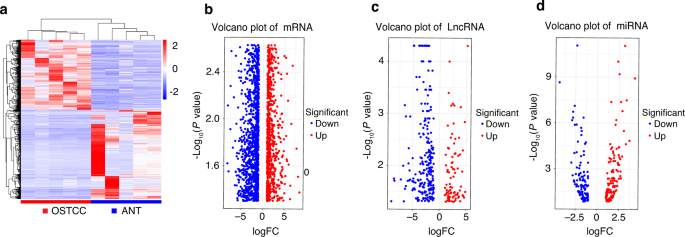
Mutation-associated transcripts reconstruct the prognostic features of oral tongue squamous cell carcinoma

alexandrossfakianakis shared this article with you from Inoreader

41368_2022_210_Fig1_HTML.png

International Journal of Oral Science, Published online: 03 January 2023; doi:10.1038/s41368-022-00210-3

Mutation-associated transcripts reconstruct the prognostic features of oral tongue squamous cell carcinoma
View on Web

Automating the treatment planning process for 3D‐conformal pediatric craniospinal irradiation therapy

alexandrossfakianakis shared this article with you from Inoreader

Abstract

Purpose

Pediatric patients with medulloblastoma in low- and middle-income countries (LMICs) are most treated with 3D-conformal photon craniospinal irradiation (CSI), a time-consuming, complex treatment to plan, especially in resource-constrained settings. Therefore, we developed and tested a 3D-conformal CSI autoplanning tool for varying patient lengths.

Methods and materials

Autocontours were generated with a deep learning model trained:tested (80:20 ratio) on 143 pediatric medulloblastoma CT scans (patient ages: 2–19 years, median = 7 years). Using the verified autocontours, the autoplanning tool generated two lateral brain fields matched to a single spine field, an extended single spine field, or two matched spine fields. Additional spine subfields were added to optimize the corresponding dose distribution. Feathering was implemented (yielding nine to 12 fields) to give a composite plan. Each planning approach was tested on six patients (ages 3–10 years). A pediatric radiation oncologist assessed clinical acceptability of each autoplan.

Results

The autocontoured structures' average Dice similarity coefficient ranged from .65 to .98. The average V95 for the brain/spinal canal for single, extended, and multi-field spine configurations was 99.9% ± 0.06%/99.9% ± 0.10%, 99.9% ± 0.07%/99.4% ± 0.30%, and 99.9% ± 0.06%/99.4% ± 0.40%, respectively. The average maximum dose across all field configurations to the brainstem, eyes (L/R), lenses (L/R), and spinal cord were 23.7 ± 0.08, 24.1 ± 0.28, 13.3 ± 5.27, and 25.5 ± 0.34 Gy, respectively (prescription = 23.4 Gy/13 fractions). Of the 18 plans tested, all were scored as clinically acceptable as-is or clinically acceptable with minor, time-efficient edits preferred or required. No plans were scored as clinically unacceptable.

Conclusion

The autoplanning tool successfully generated pediatric CSI plans for varying patient lengths in 3.50 ± 0.4 minutes on average, indicating potential for an efficient planning aid in a resource-constrained settings.

View on Web