Αρχειοθήκη ιστολογίου

Αναζήτηση αυτού του ιστολογίου

Τρίτη 13 Σεπτεμβρίου 2022

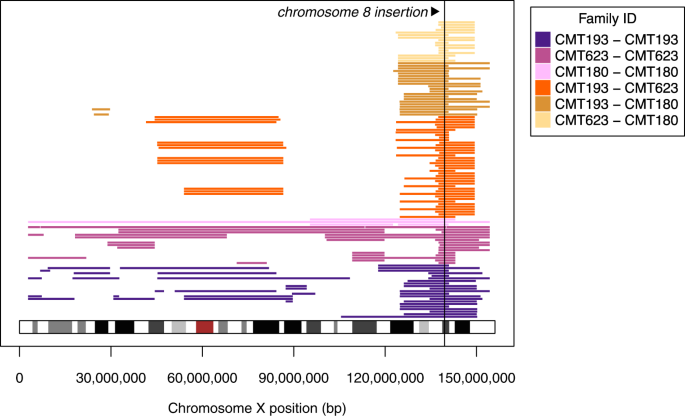
Identity-by-descent analysis of CMTX3 links three families through a common founder

alexandrossfakianakis shared this article with you from Inoreader

10038_2022_1078_Fig1_HTML.png

View on Web

Evaluation of Physicochemical Properties, Pharmacokinetics, Biodistribution, Toxicity, and Contrast-Enhanced Cancer MRI of a Cancer-Targeting Contrast Agent, MT218

alexandrossfakianakis shared this article with you from Inoreader
imageObjectives Preclinical assessments were performed according to the US Food and Drug Administration guidelines to determine the physicochemical properties, pharmacokinetics, clearance, safety, and tumor-specific magnetic resonance (MR) imaging of MT218, a peptidic gadolinium-based MR imaging agent targeting to extradomain B fibronectin for MR molecular imaging of aggressive tumors. Materials and Methods Relaxivity, chelation stability, binding affinity, safety-related target profiling, and effects on CYP450 enzymes and transporters were evaluated in vitro. Magnetic resonance imaging was performed with rats bearing prostate cancer xenografts, immunocompetent mice bearing murine pancreatic cancer allografts, and mice bearing lung cancer xenografts at different doses of MT218. Pharmacological effects on cardiovascular, respiratory, and central nervous systems were determined in rats and conscious beagle dogs. Pharmacokinetics were tested in rats and dogs. Biodistribution and excretion were studied in rats. Single and repeated dosing toxicity was evaluated in rats and dogs. In vitro and in vivo genotoxicity, in vitro hemolysis, and anaphylactic reactivity were also performed. Results At 1.4 T, the r1 and r2 relaxivities of MT218 were 5.43 and 7.40 mM−1 s−1 in pure water, 6.58 and 8.87 mM−1 s−1 in phosphate-buffered saline, and 6.54 and 8.70 mM−1 s−1 in aqueous solution of human serum albumin, respectively. The binding affinity of MT218 to extradomain B fragment is 3.45 μM. MT218 exhibited no dissociation of the Gd(III) chelates under physiological conditions. The peptide degradation half-life (t1/2) of MT218 was 1.63, 5.85, and 2.63 hours in rat, dog, and human plasma, respectively. It had little effect on CYP450 enzymes and transporters. MT218 produced up to 7-fold increase of contrast-to-noise ratios in the extradomain B fibronectin–rich tumors with a dose of 0.04 mmol/kg for at least 30 minutes. MT218 had little pharmacological effect on central nervous, cardiovascular, or respiratory systems. MT218 had a mean plasma elimination half-life (t1/2) of 0.31 and 0.89 hours in rats and dogs at 0.1 mmol/kg, respectively. No detectable Gd deposition was observed in the brain at 6 hours postinjection of MT218 at 0.1 mmol/kg in rats. MT218 was not mutagenic and had no mortality or morbidity in the rats or dogs up to 1.39 and 0.70 mmol/kg/d, respectively. The no observed adverse effect level of MT218 in Sprague-Dawley rats was 1.39 mmol/kg for single dosing and 0.46 mmol/kg/d for repeated dosing. The no observed adverse effect level in dogs was 0.07 mmol/kg/d. MT218 exhibited no genotoxicity, hemolysis, and anaphylactic reactivity. Conclusion The preclinical assessments showed that the targeted contrast agent MT218 has high r1 and r2 relaxivities, satisfactory physicochemical properties, pharmacokinetic, and safety profiles and produces effective tumor enhancement in multiple cancer types in rats and mice at reduced doses.
View on Web

The outbreak of SARS‐CoV‐2 Omicron lineages, immune escape and vaccine effectivity

alexandrossfakianakis shared this article with you from Inoreader

ABSTRACT

As of November 2021, several SARS-CoV-2 variants appeared and became dominant epidemic strains in many countries, including five VOCs (Alpha (1), Beta (2), Gamma (3), Delta (4) and Omicron (5) defined by the World Health Organization (WHO) during the COVID-19 pandemic. As of August 2022, Omicron is classified into five main lineages, BA.1, BA.2 (6), BA.3, BA.4, BA.5 (7) and some sub-lineages (BA.1.1, BA.2.12.1, BA.2.11, BA.2.75, BA.4.6) (https://www.gisaid.org/). Compared to the previous VOCs (Alpha, Beta, Gamma, and Delta), all the Omicron lineages have the most highly mutations in the spike protein, and with 50 mutations accumulated throughout the genome. Early data indicated that Omicron BA.2 sub-lineage had higher infectivity and more immune escape than the early wild-type (WT) strain, the previous VOCs, and BA.1 (8, 9, 10). Recently, global surveillance data suggest a higher transmissibility of BA.4/BA.5 than BA.1, BA.1.1 and BA.2, and BA.4/BA.5 is becoming dominant strain in many countries globally (7, 11).

This article is protected by copyright. All rights reserved.

View on Web

Voriconazole‐induced severe skin allergy and neurological adverse event in a liver failure patient: A case report

alexandrossfakianakis shared this article with you from Inoreader
Voriconazole-induced severe skin allergy and neurological adverse event in a liver failure patient: A case report

Severe allergy and neurological adverse events were appeared on the 19th day, which was the next day after voriconazole injection. The adverse events were alleviated after voriconazole withdraw for 1 week. VCZ: voriconazole, 0.4 g on the 18th day, followed by 0.2 g once daily, ALP: alprazolam, 0.2 g, per night, PT: piperacillin-tazobactam, 2.5 g every 12 h, IC: Imipenem cilastatin, 0.5 g every 8 hours, ENT: entecavir, 0.5 mg once daily, ADE: ademetionine, 0.25 g once daily, VAN: Vancomycin, 1 g every 12 h.


Abstract

What Is Known and Objective

Triazole antifungal-associated severe skin allergy has received little attention. Here we report a case of an acute-on-chronic liver failure (ACLF) patient with diffused skin allergy pervading from the chest, abdomen, back, knees to perineum, with red colour and partially desquamation as well as a neurological adverse (insomnia) event after voriconazole treatment.

Case Summary

A 40-year-old man with liver failure in our hospital had received voriconazole for invasive fungal infection therapy, and while waiting for liver transplantation exhibited a severe diffuse rash and a neurological adverse event.

What Is New and Conclusion

To the best of our knowledge, this is the first report of a liver failure patient who suffered a severe allergy accompanied with a neurological adverse event after voriconazole administration.

View on Web

Impact of Ischemia Duration on Lower Limb Salvage in Combat Casualties

alexandrossfakianakis shared this article with you from Inoreader
imageIntroduction: The 6-hour threshold to revascularization of an ischemic limb is ubiquitous in the trauma literature, however, contemporary evidence suggests that this threshold should be less. This study aims to characterize the relationship between the duration of limb ischemia and successful limb salvage following lower extremity arterial trauma. Methods: This is a cohort study of the United States and UK military service members injured while serving in Iraq or Afghanistan between 2003 and 2013. Consecutive patients who sustained iliac, femoral, or popliteal artery injuries, and underwent surgery to attempt revascularization, were included. The association between limb outcome and the duration of limb ischemia was assessed using the Kaplan-Meier method. Results: One hundred twenty-two patients (129 limbs) who sustained iliac (2.3%), femoral (56.6%), and popliteal (41.1%) arterial injuries were included. Overall, 87 limbs (67.4%) were successfully salvaged. The probability of limb salvage was 86.0% when ischemia was ≤1 hour; 68.3% when between 1 and 3 hours; 56.3% when between 3 and 6 hours; and 6.7% when >6 hours (P
View on Web

Δευτέρα 12 Σεπτεμβρίου 2022

Assessing transmission risks and control strategy for monkeypox as an emerging zoonosis in a metropolitan area

alexandrossfakianakis shared this article with you from Inoreader

Abstract

Objective

To model the spread of Monkeypox (MPX) in a metropolitan area for assessing the risk of possible outbreaks, and identifying essential public health measures to contain the virus spread.

Methods

The animal reservoir is the key element in the modelling of a zoonotic disease. Using a One Health approach, we model the spread of the MPX virus in humans considering potential animal hosts such as rodents (e.g., rats, mice, squirrels, chipmunks, etc.) and emphasize their role and transmission of the virus in a high-risk group, including gay and bisexual men-who-have-sex-with-men (gbMSM). From model and sensitivity analysis, we identify key public health factors and present scenarios under different transmission assumptions.

Findings

We find that the MPX virus may spill over from gbMSM high-risk groups to broader populations if efficiency of transmission increases in the higher-risk group. However, the risk of outbreak can be greatly reduced if at least 65% of symptomatic cases can be isolated and their contacts traced and quarantined. In addition, infections in an animal reservoir will exacerbate MPX transmission risk in the human population.

Conclusion

Regions or communities with a higher proportion of gbMSM individuals need greater public health attention. Tracing and quarantine (or "effective quarantine" by post-exposure vaccination) of contacts with MPX cases in high-risk groups would have a significant effect on controlling the spreading. Also, monitoring for animal infections would be prudent.

This article is protected by copyright. All rights reserved.

View on Web

Κυριακή 11 Σεπτεμβρίου 2022

LAMP‐2A ablation in hippocampal CA1 astrocytes confers cerebroprotection and ameliorates neuronal injury after global brain ischemia

alexandrossfakianakis shared this article with you from Inoreader
LAMP-2A ablation in hippocampal CA1 astrocytes confers cerebroprotection and ameliorates neuronal injury after global brain ischemia

Hippocampal astrocytic LAMP-2A knockdown inhibits astrocyte activation, maintains the integrity of neuronal morphology, and ameliorates cognitive deficits after transient global cerebral ischemia.


Abstract

Reactive astrogliosis and neuronal death are major features of brain tissue damage after transient global cerebral ischemia/reperfusion (I/R). The CA1 subfield in the hippocampus is particularly susceptible to cell death after I/R. Recently, attention has focused on the relationship between the autophagy–lysosomal pathway and cerebral ischemia. Lysosomal-associated membrane protein type-2A (LAMP-2A) is a key protein in chaperone-mediated autophagy (CMA). However, LAMP-2A expression in astrocytes of the hippocampus and its influence on brain injury following I/R remain unknown. Here, we show that LAMP-2A is elevated in astrocytes of the CA1 hippocampal subfield after I/R and in primary cultured astrocytes after transient oxygen–glucose deprivation (OGD). Conditional LAMP-2A knockdown in CA1 astrocytes inhibited astrocyte activation and prevented neuronal death by inhibiting the mitochondrial pathway of apoptosis after I/R, suggesting that elevated astrocytic LAMP-2A contributes to regional ischemic vulnerability. Furthermore, astrocytic LAMP-2A ablation ameliorated the spatial learning and memory deficits caused by I/R. Conditional astrocytic LAMP-2A knockdown also prevented the loss of hippocampal synapses and dendritic spines, improved the synaptic ultrastructure, and inhibited the reduced expression of synaptic proteins after ischemia. Thus, our findings demonstrate that astrocytic LAMP-2A expression increases upon I/R and that LAMP-2A ablation specifically in hippocampal astrocytes contributes to cerebroprotection, suggesting a novel neuroprotective strategy for patients with global ischemia.

View on Web