Αρχειοθήκη ιστολογίου

Αναζήτηση αυτού του ιστολογίου

Κυριακή 29 Νοεμβρίου 2020

Retrospective Assessment of Risk Factors for Head and Neck Cancer Among World Trade Center General Responders

alkiviadis.1961 shared this article with you from Inoreader

488057_Thumb_400.jpg

Objective: To assess the reliability of a questionnaire designed to reconstruct risk factors for head and neck cancer relative to the 9/11 World Trade Center (WTC) response and over the lifetime.

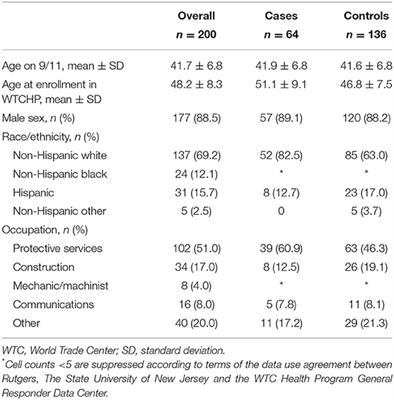
Methods: As part of a nested case-control study, 200 WTC Health Program (WTCHP) General Responder Cohort (GRC) members completed a newly-developed study questionnaire via telephone (with a trained interviewer) or online (self-administered). We assessed agreement between measures of tobacco and alcohol use in ou r questionnaire results and data collected previously during WTCHP-GRC monitoring visits using Cohens Kappa (κ) and intraclass correlation coefficient (ICC) for categorical and continuous measures, respectively. We compared agreement by disease status, survey mode, and year of WTCHP enrollment.

Results: We observed high agreement between measures of lifetime, pre-WTC, and post-WTC smoking prevalence (all κ > 0.85) and smoking duration (all ICC > 0.84). There was moderate agreement between measures of smoking frequency (ICC: 0.61–0.73). Agreement between measures of smoking frequency, but not duration, differed by disease status, and agreement between smoking measures was higher for participants who completed our survey by phone than by web. Among cases, there were no differences based on enrollment in the WTCHP before or after diagnosis.

Conclusion: Agreement between measures was generally high, although potential reporting bias and a mode effect that should be considered when interpreting analyses of self-reported data in this population; however differential misclassification appears to be minimal. Our questionnaire may be useful for future studies examining similar behavioral risk factors among disaster-exposed populations.

View on the web

Rapid-Cycle Evaluation in an Early Intervention Program for Children With Developmental Disabilities in South India: Optimizing Service Providers' Quality of Work-Life, Family Program Engagement, and School Enrollment

alkiviadis.1961 shared this article with you from Inoreader

567907_Thumb_400.jpg

Background: This paper explores how implementation and refinement of an early intervention (EI) program for children with delayed development was informed by an iterative, intentional and structured process of measurement. Providing access to early intervention therapy for children in rural areas of India is challenging due to a lack of rehabilitation therapists and programs. Following a biopsychosocial framework and principles of community-based rehabilitation, a non-governmental organization, Amar Seva San gam (ASSA), overcame those barriers by designing a digital technology supported EI program in rural Tamil Nadu, India. Program objectives included providing service access; supporting program engagement, child development and school enrollment; and positioning the intervention for scale-up. This paper contributes to a growing body of literature on how program design and implementation can be informed through a cyclical process of data collection, analysis, reflection, and adaptation.

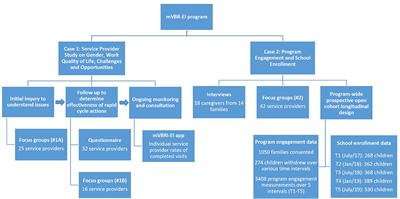
Methods: Through several strands of data collection, the design and implementation of the EI program was adapted and improved. This included qualitative data from focus groups and interviews with caregivers and service providers, and a mobile application that collected and monitored longitudinal quantitative data, including program engagement rates, developmental progression, caregiver outcomes, and school enrollment status.

Results: Measurements throughout the program informed decision-maki ng by identifying facilitators and barriers to service providers' quality of work-life, family program engagement, and school enrollment. Consultation with key stakeholders, including caregivers and service providers, and data driven decision making led to continual program changes that improved service provider quality of work-life, program engagement and school enrollment. These changes included addressing gender-related work challenges for service providers; forming caregiver support networks; introducing psychological counseling for caregivers; providing medical consultations and assistive devices; creating community awareness programs; improving access to therapy services; focusing on caregiver education, motivation and support; and advocacy for accessibility in schools.

Conclusion: The process of using evidence-informed and stakeholder driven adaptations to the early intervention program, led to improved service provider quality of work-life, greater program engagement, improved school enrollment and positioned the intervention for scale-up, providing lessons that may be beneficial in other contexts.


View on the web

Prediction of Epidemics Trend of COVID-19 in Bangladesh

alkiviadis.1961 shared this article with you from Inoreader

559437_Thumb_400.jpg

Background: Amid a critical and emergent situation like the coronavirus disease (COVID-19) pandemic related to extreme health and economic repercussions, we used and presented the mathematical modeling like susceptible–infectious–recovered (SIR) to have a numerical demonstration that can shed light to decide the fate of the scourge in Bangladesh. To describe the idea about the factors influencing the outbreak data, we presented the current situation of the COVID-19 outbreak with graphical trends.

M ethods: Primary data were collected and analyzed by using a pre-created Google Survey form having a pre-set questionnaire on the social distancing status of different districts. Secondary data on the total and the daily number of laboratory tests, confirmed positive cases, and death cases were extracted from the publicly available sources to make predictions. We estimated the basic reproduction number (R◦) based on the SIR mathematical model and predicted the probable fate of this pandemic in Bangladesh.

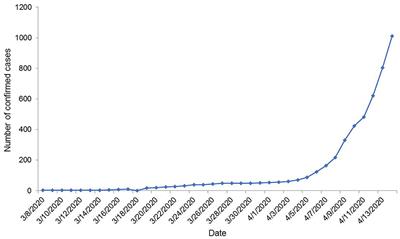
Results: Quarantine situations in different regions of Bangladesh were evaluated and presented. We also provided tentative forecasts until 31 May 2020 and found that the predicted curve followed the actual curve approximately. Estimated R◦-values (6.924) indicated that infection rate would be greater than the recovery rate. Furthermore, by calibrating the parameters of the SIR model to fit the reported data, we assume the ultimate ending of the pandem ic in Bangladesh by December 2022.

Conclusion: We hope that the results of our analysis could contribute to the elucidation of critical aspects of this outbreak and help the concerned authority toward decision making.

View on the web

Hyoscine butylbromide versus acetaminophen for nonspecific colicky abdominal pain in children: a randomized controlled trial [Research]

alkiviadis.1961 shared this article with you from Inoreader

48.cover-source.jpg

BACKGROUND:

Less than two-thirds of children with abdominal pain in the emergency department receive analgesia. We sought to determine whether hyoscine butylbromide was superior to acetaminophen for children with nonspecific colicky abdominal pain.

METHODS:

We randomly allocated children aged 8–17 years with nonspecific colicky abdominal pain who presented to the pediatric emergency department of London Health Sciences Centre, London, Ontario to receive hyoscine butylbromide, 10 mg given orally, or acetaminophen, 15 mg/kg given orally (maximum 975 mg). We considered the minimal clinically important difference for the primary outcome (self-reported pain at 80 min) to be 13 mm on a 100 mm visual analogue scale. Secondary outcomes included administration of rescue analgesia, adverse effects and pain score less than 30 mm at 80 minutes.

RESULTS:

A total of 236 participants (120 in the hyoscine butylbromide group and 116 in the acetaminophen group) were included in the trial. The mean visual analogue scale scores at 80 minutes were 29 mm (standard deviation [SD] 26 mm) and 30 mm (SD 29 mm) with hyoscine butylbromide and acetaminophen, respectively (adjusted difference 1, 95% confidence interval –7 to 7). Rescue analgesia was administered to 4 participants (3.3%) in the hyoscine butylbromide group and 1 participant (0.9%) in the acetaminophen groups (p = 0.2). We found no significant differences in rates of adverse effects between hyoscine butylbromide (32/116 [27.6%]) and acetaminophen (28/115 [24.3]) (p = 0.5); no serious adverse effects were observed. The proportion with a pain score less than 30 mm at 80 minutes was 66 (55.0%) with hyoscine butylbromide and 63 (54.3%) with acetaminophen (p = 0.9).

INTERPRETATION:

Hyoscine butylbromide was not superior to acetaminophen in this setting. Both agents were associated with clinically important pain reduction, and either can be considered for children presenting to the emergency department with nonspecific colicky abdominal pain. Trial registration: Clinicaltrials.gov, no. NCT02582307

View on the web

Πέμπτη 26 Νοεμβρίου 2020

Unusual presentations of cutaneous larva migrans in British military personnel

alkiviadis.1961 shared this article with you from Inoreader

Cutaneous larva migrans (CLM) is one of numerous skin diseases that occur in British military personnel on deployments to the tropics and sub-tropics. It is typically managed by military primary healthcare services, but diagnostic uncertainty or unavailability of anti-helminthic medication may prompt referral to UK Role 4 healthcare services. Cases of CLM seen at the UK Role 4 Military Infectious Diseases & Tropical Medicine Service from 2005 to 2020 were identified and their case notes were reviewed to identify learning and discussion points. There were 12 cases identified, of which five came from Brunei and three were from Belize. Causes for referral were due to diagnostic uncertainty (58%) and the unavailability of anti-helminthic medication (42%). Several cases had CLM in an unusual distribution due to specific military activities performed in endemic areas. Telemedicine was very useful in making some of the diagnoses in theatre and avoiding the need for medical evacuation. Military personnel may have unusual presentations of CLM due their unique military activities. In areas that are endemic for CLM, clinicians should maintain high clinical suspicion for CLM, carry appropriate anti-helminthic medications and consider screening cases of CLM and their colleagues for other infections with similar aetiology (eg, human hookworm infection and strongyloidiasis).

View on the web

Sex-Related Differences in Anxious-Depressive and Defensive Behavior in Wistar Rats

alkiviadis.1961 shared this article with you from Inoreader

11055.jpg

Sex-related differences in the behavior of animals in aversive situations were identified by comparing male and female Wistar rats in tests for anxiety, depression-like behavior, assessments of the dynamics of the acquisition and extinction of a classical defensive reflex and a passive avoidance reflex, and also acquisition of an active avoidance reflex. In tests for anxiety, females differed from males in having lower levels of anxiety and greater movement and exploratory activity. In the Porsolt test, females showed less extensive signs of depression-like behavior. After stress, the blood corticosterone content in females was greater than that in males. Females showed higher pain sensitivity. Conditioned reflex fear in the passive avoidance reflex was greater in males than females; ther e was no difference in animals of different sexes in the classical defensive reflex. Extinction of conditioned reflex fear in these two types of reflex occurred more quickly in females than males. Acquisition of the active avoidance reflex was easier in females than males. It is suggested that females are more inclined to the active defensive strategy and to overestimate danger, while males, conversely, prefer passive defensive responses.

View on the web

Microelectrophysiological Studies of the Ratio of Excitatory to Inhibitory Synaptic Processes in the Corticonigral Projection in a Model of Parkinson’s

alkiviadis.1961 shared this article with you from Inoreader

11055.jpg

Experiments on 23 white male rats (250 g) analyzed the spike activity of individual neurons in the substantia nigra pars compacta (SNc, 242 neurons, n = 11) and substantia nigra pars reticulata (SNr, 289 neurons, n = 12) during high-frequency stimulation of the primary motor cortex (M1)in normal animals and in animals with a rotenone model of Parkinson's disease (BP). SNc neurons in the model of PD showed a complete absence of depressor effects induced by stimulation, though tetanic potentiation was accompanied by posttetanic potentiation and depression at levels 1.65 and 2.02 times greater than in normal animals. In SNr neurons in normal animals, tetanic potentiation, accompanied by post-tetanic potentiation and depression, was 2.37 times greater than tetanic depressi on, while in the model of PD the levels of both depressor and excitatory activity induced by stimulation were below normal. Spike activity frequency in SNc and SNr neurons preceding and accompanying stimulation was significantly greater than normal in the model of PD. This is evidence for excitotoxicity accompanying neurodegenerative damage, which is completed by neuron apoptosis and death. In SNr neurons, both depressor and excitatory reactions accompanying stimulation were markedly dominant over those in SNc neurons, which is evidence for more extensive cortical projections to the SNr. Furthermore, SNc neurons demonstrated greater susceptibility to pathological changes due to poststimulus depressor effects than SNr neurons, with formation of more marked excitatory effects, which is evidence of a greater involvement of the SNc in PD. In the model of PD, lacking stimulation-induced depressor effects and more marked excitatory effects in SNc neurons, SNr neurons retained their depres sor reactions and relatively decreased excitatory reactions, which is evidence of a lower level of susceptibility of SNr neurons to excitotoxicity, extreme increases in the excitability of surviving neurons compensating for the lack of excitation of dead cells.

View on the web