Αρχειοθήκη ιστολογίου

Αναζήτηση αυτού του ιστολογίου

Τετάρτη 22 Ιουνίου 2022

Effects of anterior bite planes fabricated from acrylic resin and thermoplastic material on masticatory muscle responses and maximum bite force in children with a deep bite: a 6‐month randomized controlled trial

alexandrossfakianakis shared this article with you from Inoreader

Abstract

Background

Anterior bite planes are bite-raising appliances used for deep bite correction. However, muscle responses to anterior bite planes of different hardnesses may vary.

Objectives

To prospectively evaluate masticatory muscle activity, muscle balance, and maximum bite force (MBF) responses to anterior bite planes fabricated from acrylic resin (ABP) or bi-laminate thermoplastic (TBP) over 6 months in children with a deep bite.

Methods

Sixty-six children were randomly assigned to the ABP, TBP, or untreated control groups. Masticatory muscle activity, activity index (AC), and percentage overlapping coefficient (POC) were assessed by surface electromyography; MBF, using a custom-made bite force sensor. Data were collected before, immediately after appliance insertion, and after 2 weeks and 1, 3, and 6 months of treatment. Within- and between-group differences were analyzed using one-way ANOVA/Kruskal-Wallis and Mann Whitney U-tests (α=0.05); Friedman's tests were used to assess within-group differences over time (α=0.08).

Results

At rest, no dependent variables changed throughout the study. At maximum clenching, masticatory muscle activity immediately dropped significantly but returned to baseline values and was equal to the control group at 1-3 months. The ABP group had significantly lower masseter activity and AC than the TBP group after insertion. Neither POC nor MBF were significantly different within or between groups.

Conclusion

Masticatory muscle activity reduced after anterior bite plane insertion but returned to baseline after 1-3 months. Masseter activity decreased significantly more in the ABP group than TBP group. Neither appliance significantly affected POC or MBF.

View on Web

Durability of immune responses after boosting in Ad26.COV2.S-primed healthcare workers

alexandrossfakianakis shared this article with you from Inoreader
Abstract
The emergence of SARS-CoV-2 variants raised questions regarding the durability of immune responses after homologous or heterologous booster vaccination after Ad26.COV2.S priming. We found that SARS-CoV-2-specific binding antibodies, neutralizing antibodies and T-cells are detectable 5 months after boosting, although waning of antibodies and limited cross-reactivity with Omicron BA.1 was observed.
View on Web

Beta-lactam antibiotic therapeutic drug monitoring in critically ill patients: a systematic review and meta-analysis et al.

alexandrossfakianakis shared this article with you from Inoreader
ABSTRACT
Therapeutic drug monitoring (TDM) of beta-lactam antibiotics is recommended to address the variability in exposure observed in critical illness. However, the impact of TDM-guided dosing on clinical outcomes remains unknown. We conducted systematic review and meta-analysis on TDM-guided dosing and clinical outcomes (all-cause mortality, clinical cure, microbiological cure, treatment failure, hospital and ICU length of stay, target attainment, antibiotic-related adverse events, and emergence of resistance) in critically ill patients with suspected or proven sepsis. Eleven studies (n = 1463 participants) were included. TDM-guided dosing was associated with improved clinical cure (Relative Risk 1.17; 95% Confidence Interval [1.04, 1.31]), microbiological cure (1.14; [1.03, 1.27]), treatment failure (0.79; [0.66, 0.94]), and target attainment (1.85; [1.08, 3.16]). No associations with mortality and length of stay were found. TDM-guided dosing impr oved clinical and microbiological cure, and treatment response. Larger, prospective randomized trials are required to better assess the utility of beta-lactam TDM in critically ill patients.
View on Web

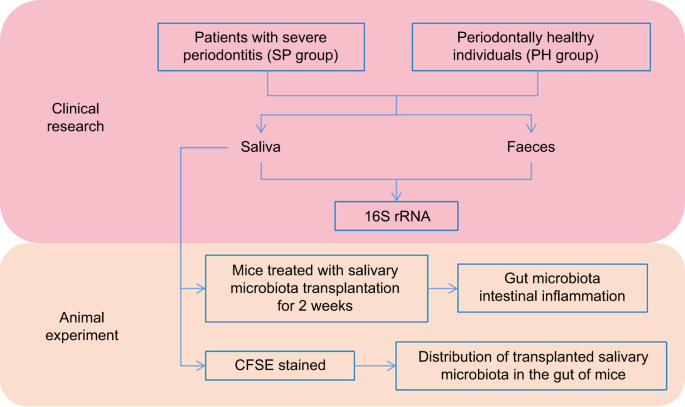
Periodontitis may induce gut microbiota dysbiosis via salivary microbiota

alexandrossfakianakis shared this article with you from Inoreader

41368_2022_183_Fig1_HTML.png

View on Web

Τρίτη 21 Ιουνίου 2022

A novel homozygous missense mutation in the FASTKD2 gene leads to Lennox-Gastaut syndrome

alexandrossfakianakis shared this article with you from Inoreader

Journal of Human Genetics, Published online: 21 June 2022; doi:10.1038/s10038-022-01056-7

A novel homozygous missense mutation in the FASTKD2 gene leads to Lennox-Gastaut syndrome
View on Web

FRK inhibits glioblastoma progression via phosphorylating YAP and inducing its ubiquitylation and degradation by Siah1

alexandrossfakianakis shared this article with you from Inoreader
Abstract
Background
We previously report that yes-associated protein (YAP), the core downstream effector of Hippo pathway, promotes the malignant progression of glioblastoma (GBM). However, although classical regulatory mechanisms of YAP are well explored, how YAP is modulated by the Hippo-independent manner remains poorly understood. Meanwhile, the non-receptor tyrosine kinase Fyn-related kinase (FRK), which exhibits low expression and possesses tumor suppressor effects in GBM, is reported to be involved in regulation of protein phosphorylation. Here, we examined whether FRK could impede tumor progression by modulating YAP activities.
Methods
Human GBM cells and intracranial GBM model were used to assess the effects of FRK and YAP on the malignant biological behaviors of GBM. Immunoblotting and immunohistochemistry were used to detect the expression of core proteins in GBM tissues. Co-immunoprecipitation, proximity ligation assay, luci ferase assay and ubiquitination assay were utilized to determine the protein-protein interactions and related molecular mechanisms.
Results
The expression levels of FRK and YAP were inversely correlated with each other in glioma tissues. In addition, FRK promoted the ubiquitination and degradation of YAP, leading to tumor suppression in vitro and in vivo. Mechanistically, FRK interacted with and phosphorylated YAP on Tyr391/407/444, which recruited the classical E3 ubiquitin ligase Siah1 to catalyze ubiquitination and eventually degradation of YAP. Siah1 is required for YAP destabilization initiated by FRK.
Conclusions
We identify a novel mechanism by which FRK orchestrates tumor-suppression effect through phosphorylating YAP and inducing its ubiquitination by Siah1. FRK-Siah1-YAP signaling axis may serve as a potential therapeutic target for GBM treatment.

View on Web

Combination of fluorescence visualization and iodine solution-guided surgery for local control of early tongue cancer

alexandrossfakianakis shared this article with you from Inoreader
The control of enclosed oral epithelial dysplasia is important for the control of oral cancer. Fluorescence visualization and iodine solution are able to detect oral epithelial dysplasia and surrounding oral cancer. The purpose of this study was to clarify the effectiveness of combining fluorescence visualization and iodine solution-guided surgery for early tongue cancer. Participants comprised 264 patients with primary early tongue cancer who underwent surgery. The surgical margin was set at 10  mm outside the clinical tumour, and 5 mm outside the area of fluorescence visualization loss, and 5mm outside the iodine unstained area. (Source: International Journal of Oral and Maxillofacial Surgery)
View on Web