Αρχειοθήκη ιστολογίου

Αναζήτηση αυτού του ιστολογίου

Πέμπτη 28 Ιανουαρίου 2021

De Novo vs Inverted Papilloma–Associated Sinonasal Squamous Cell Carcinoma Survival Outcomes

Greek DailyNews shared this article with you from Inoreader

ooi200090f1_1611091036.66902.png?Expires

This systematic review and meta-analysis uses data from studies retrieved f rom an Ovid Medline, Embase, Scopus, and Cochrane Library database search to investigate survival differences between de novo and inverted papilloma–associated sinonasal squamous cell carcinoma pathogenesis.
View on the web

Prevalence of anemia among patients with solid cancers at diagnosis

Greek DailyNews shared this article with you from Inoreader

journal.pone.0246202.g002&size=inline

by Mazen Almehmadi, Magdi Salih, Tariq E. Elmissbah, Abdulaziz Alsharif, Naif Alsiwiehri, Khalid Alzahrani, Alaa Shafie, Haytham Dahlawi

Objectives

The aim of this study was to estimate the prevalence of anemia among patients newly diagnosed with solid malignancies at King Faisal Hospital in Taif Province, Kingdom of Saudi Arabia.

Methods

A descriptive, cross-sectional, hospital-based study was conducted from December 2017 to March 2020. A total of 320 patients newly diagnosed with solid malignancy were examined to assess anemia prevalence.

Results

Of 320 patients with solid cancers, 245 (76.6%) were female and 75 (23.4%) were male. The median (interquartile range) age of 57 (45 ─ 66) years, range between 16 and 108 years. The types of cancer included were breast (29.1%), female genital tract (20.0%), colorectal (25.3%), head and neck (10.3%), urinary bladder (4.7%), prostate (5.0%), lung (2.5%), liver (2.2%) and lymphoma (0.9%). The prevalence of anemia at diagnosis of cancer was 44.1% across all cancer types. A higher anemia prevalence was noted in colorectal (n = 46/81, 56.8%) (p = 0.047).

Conclusion

Patients with colorectal or female genital tract cancers had a higher anemia prevalence (56.8% and 43.8%, respectively) than did patients with other cancers.


View on the web

The Possible Role of Sclerostin in the Pathogenesis of Tympanosclerosis

Greek DailyNews shared this article with you from Inoreader

?image=000508692-1.jpg

Objective: The aim of this study was to investigate sclerostin (SOST) expression in a rat model of experimental tympanosclerosis (TS) and its possible role in the formation of TS. Materials and Methods: Thirty-four SD rats were randomly divided into 2 groups: experimental group (n = 17) and normal group (n = 17). The left tympanic cavities in the experimental group were inoculated with methicillin-resistant Staphylococcus aureus. The changes of t ympanic membranes were examined and recorded under otoendoscope. Haematoxylin-eosin staining was adopted to detect the morphological changes in the tympanic membrane and middle ear mucosa. Immunohistochemistry and Western blot analysis were used to observe the expression of SOST, Wnt3a, β-catenin, and P-ERK1/2. Results: In the experimental group, sclerotic lesions were observed in 54.5% ears in the end of 6 weeks. Morphological changes such as mucosa incrassation, inflammatory cells infiltration, fibrous tissue proliferation, and interstitial tissue incrassation prominently appeared in the tympanic membrane and middle ear mucosa. SOST protein was mainly distributed in the cytoplasm of epithelial cells and gland cells, the expression of which increased significantly in the calcified experimental ears. In addition, expression levels of Wnt3a, β-catenin, and P-ERK1/2 increased significantly in the calcified group too. Conclusion: The upregulated expression level of SOST may be involved in the formation of TS, first, through the pro-phosphorylation of ERK1/2 in the inflammatory stage, and then through the enhancement of Wnt3a in the osteogenic stage.
Audiol Neurotol
View on the web

Stem Cells and Gene Therapy in Progressive Hearing Loss: the State of the Art

Greek DailyNews shared this article with you from Inoreader

10162.jpg

Abstract

Progressive non-syndromic sensorineural hearing loss (PNSHL) is the most common cause of sensory impairment, affecting more than a third of individuals over the age of 65. PNSHL includes noise-induced hearing loss (NIHL) and inherited forms of deafness, among which is delayed-onset autosomal dominant hearing loss (AD PNSHL). PNSHL is a prime candidate for genetic therapies due to the fact that PNSHL has been studied extensively, and there is a potentially wide window between identification of the disorder and the onset of hearing loss. Several gene therapy strategies exist that show potential for targeting PNSHL, including viral and non-viral approaches, and gene editing versus gene-modulating approaches. To fully explore the potential of these therapy strategies, a faithful in vitro model of the human inner ear is needed. Such models may come from induced pluripotent stem cells (iPSCs). The development of new treatment modalities by combining iPSC modeling with novel and innovative gene therapy approaches will pave the way for future applications leading to improved quality of life for many affected individuals and their families.

View on the web

5 things to know about capnography and respiratory distress

Greek DailyNews shared this article with you from Inoreader

3capnoEMS.jpg?w=1600&format=jpg&quality=

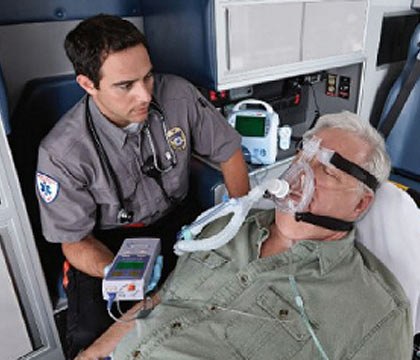
Understand how monitoring end-tidal carbon dioxide helps assess and treat a patient in respiratory distress
Attachments:
View on the web

Τετάρτη 27 Ιανουαρίου 2021

Can the Japanese National Clinical Database risk calculator predict long-term survival of patients who undergo palliative segmentectomy for primary lung cancer?

xlomafota.13 shared this article with you from Inoreader

11748.jpg

Abstract

Objectives

Selection criteria for palliative limited surgery in patients with non-small cell lung cancer (NSCLC) can vary by institution or surgeon. We retrospectively reviewed outcomes of poor-risk patients who underwent palliative segmentectomy (PS), using the National Clinical Database Risk Calculator (RC).

Methods

We retrospectively analyzed medical records of patients with NSCLC tumors ≥ 20 mm and consolidation/tumor ratios ≥ 0.5 on computed tomography, who underwent PS from January 2009 to March 2016. Median follow-up time was 47 months (range 2–102 months).

Results

We enrolled 67 patients (median age: 73.0 years), of whom 54 received thoracoscopic surgery and 28 received medial lymph-node dissection. The RC's mean predictive probability rate for perioperative mortality or severe complications was 7.1%. Of the 67 patients, 24 patients (43.0%) suffered post-surgical complications, including 2 (3%) who died in hospital; 17 eventually suffered NSCLC recurrences and/or metastases, 11 eventually died from NSCLC, and 17 died from other diseases. Five-year overall survival (OS) was 59.4%. When the patients were divided into high-risk (HR) and low-risk (LR) groups based on the RC, 5-year OS was significantly less in the HR group (43.9%) than in the LR group (82.2%; P < 0.05).

Conclusion

The RC, which was developed primarily to determine perioperative risk, can predict long-term prognosis for compromised patients who undergo PS.

View on the web

Efficacy of three-dimensional computed tomography volumetry for recipients in downsizing oversized grafts in brain-dead donor lung transplantation

xlomafota.13 shared this article with you from Inoreader

11748.jpg

Abstract

Objective

Brain-dead donor lung transplantation frequently requires reduction in the size of oversized lung grafts for patients with a small chest cavity. We focused on the role of three-dimensional computed tomography (3D-CT) volumetry for recipients on downsizing oversized lung grafts.

Methods

We performed 53 brain-dead donor bilateral lung transplantations, including 15 lobar lung transplants (Lobar group) and 38 standard lung transplants with full-sized grafts (Full group), between December 2010 and December 2018. Recipient chest volume before transplantation was measured using 3D-CT volumetry, and donor lung volume was evaluated by predicted total lung capacity. Post-transplant outcomes and pulmonary function were retrospectively compared between the groups.

Results

The ratio of the recipient chest volume to the donor lung volume was significantly lower in the Lobar group (0.42 ± 0.15) than in the Full group (0.77 ± 0.30, P < 0.01). The calculated size matching between the donor and recipient after downsizing the grafts was significantly correlated to the ratio of the recipient chest volume to the donor lung volume (Spearman r = 0.69; P < 0.01). Early post-transplant outcomes did not significantly differ between the groups. Although the Full group showed slightly better pulmonary function after transplantation, the 1-, 3-, and 5-year overall survival rates were similar to the Lobar group (100%, 93%, and 81% in the Lobar group vs. 92%, 78%, and 70% in the Full group; P = 0.50).

Conclusions

Brain-dead donor lobar lung transplantation showed favorable post-transplant outcomes. The assessment of recipient chest cavity volume using 3D-CT volumetry may help surgeons precisely downsize oversized lung grafts prior to transplantation.

View on the web