Αρχειοθήκη ιστολογίου

Αναζήτηση αυτού του ιστολογίου

Δευτέρα 9 Νοεμβρίου 2020

Intrathecal Delivery of BDNF Into the Lumbar Cistern Re-Engages Locomotor Stepping After Spinal Cord Injury

alkiviadis.1961 shared this article with you from Inoreader
Delivery of neurotrophins to the spinal injury site via cellular transplants or viral vectors administration has been shown to promote recovery of locomotion in the absence of locomotor training in adult spinalized animals. These delivery methods involved risks of secondary injury to the cord and do not allow for precise and controlled dosing making them unsuitable for clinical applications. The present study was aimed at evaluating the locomotor recovery efficacy and safety of the neurotrophin BDNF delivered intrathecally to the lumbar locomotor centers using an implantable and programmable infusion mini-pump. Results showed that BDNF treated spinal cats recovered weight-bearing plantar stepping at all velocities tested (0.3-0.8 m/s). Spinal cats treated with saline did not recover stepping ability, especially at higher velocities, and dragged their hind paws on the treadmill. Histological evaluation showed minimal catheter associated trauma and tissue inflammation, underlinin g that intrathecal delivery by an implantable/programmable pump is a safe and effective method for delivery of a controlled BDNF dosage; it poses minimal risks to the cord and is clinically translational.
View on the web

Longitudinal effects of breast feeding on parent-reported child behaviour

alkiviadis.1961 shared this article with you from Inoreader

11.cover-source.jpg

Objective

Shorter breastfeeding duration has been linked to a range of difficulties in children. However, evidence linking shorter breastfeeding duration to child behavioural problems has been inconclusive. Owing to an almost exclusive focus on early childhood in previous research, little is known about breastfeeding effects on behaviour throughout childhood and adolescence. This study examines the longitudinal effect of breast feeding on parent-reported behaviour in children aged 3–14.

Design

Data come fr om the Millennium Cohort Study, a large, prospective, UK birth cohort study.

Participants

11 148 children, their parents and teachers.

Methods

This study maps the effect of breastfeeding duration on parent-reported child behaviour longitudinally, using latent growth curve modelling and on teacher-reported child behaviour using multiple regression analyses. Breastfeeding duration was assessed through parent interviews when the child was 9 months old. Children's behavioural development was measured using parent-reported Strengths and Difficulties Questionnaires (SDQ) at 3, 5, 7, 11 and 14 years and teacher-reported SDQs at 7 and 11 years.

Results

Breast feeding was associated with fewer parent-reported behavioural difficulties at all ages even after adjusting for potential confounders (<2 months: B=–0.22, 95% CI –0.39 to –0.04; 2–4 months: B=–0.53, 95% CI –0.75 to –0.32; 4–6 months: B=–1.07, 95% CI –1.33 to –0.81; >6 mo nths: B=–1.24, 95% CI –1.44 to –1.04; B=adjusted mean difference of raw SDQ scores at age 3, reference: never breast fed).

Conclusion

This study provides further evidence supporting links between breastfeeding duration and children's socioemotional behavioural development. Potential implications include intervention strategies encouraging breast feeding.


View on the web

Foot and ankle injuries

alkiviadis.1961 shared this article with you from Inoreader

E.cover-source.jpg

Introduction

Musculoskeletal foot and ankle injuries are commonly experienced by soldiers during military training. We performed a systematic review to assess epidemiological patterns of foot and ankle injuries occurring during military training.

Methods

A review of the literature was performed according to the Preferred Reporting Items for Systematic Reviews and Meta-Analyses guidelines. The search, done on 14 February 2019, resulted in 1603 reports on PubMed, 565 on Embase and 3 on the Cochrane Library. A fter reading the remaining full-text articles, we included 91 studies.

Results

Among a population of 8 092 281 soldiers from 15 countries, 788 469 (9.74%) foot and ankle injuries were recorded. Among the 49 studies that reported on length of training, there were 36 770/295 040 (18.17%) injuries recorded among women and 248 660/1 501 672 (16.56%) injuries recorded among men over a pooled mean (±SD) training period of 4.51±2.34 months. Ankle injuries were roughly 7 times more common than foot injuries, and acute injuries were roughly 24 times more common than non-acute injuries. Our findings indicated that, during a 3-month training period, soldiers have a 3.14% chance of sustaining a foot and ankle injury. The incidence of foot or ankle injury during military parachutist training was 3.1 injuries per thousand jumps.

Conclusions

Our findings provide an overview of epidemiological patterns of foot and ankle injuries during military training. These data can be used to compar e incidence rates of foot and ankle injuries due to acute or non-acute mechanisms during training. Cost-effective methods of preventing acute ankle injuries and non-acute foot injuries are needed to address this problem.

View on the web

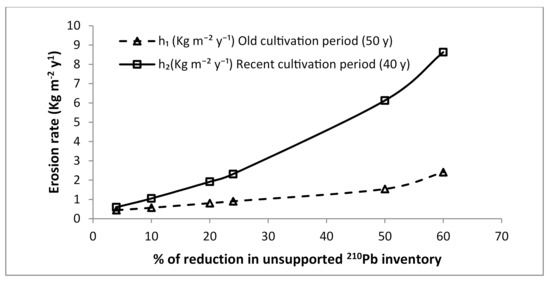
Combination of 137Cs and 210Pb Radioactive Atmospheric Fallouts to Estimate Soil Erosion for the Same Time Scale

alkiviadis.1961 shared this article with you from Inoreader

ijerph-17-08292-g001-550.jpg

IJERPH, Vol. 17, Pages 8292: Combination of 137Cs and 210Pb Radioactive Atmospheric Fallouts to Estimate Soil Erosion for the Same Time Scale

International Journal of Environmental Research and Public Health doi: 10.3390/ijerph17228292

Authors: Foued Gharbi Torfa Hamad AlSheddi Rebai Ben Ammar Medhat Ahmed El-Naggar

Naturally occurring 210Pb and artificial 137Cs fallouts are widely used as radioactive tracers for the determination of water-induced soil erosion for different time scales equal to 50 and 100 years, respectively. There exist several calibration models useful to convert the variation of the inventory of these radiotracers in cultivated soil compared to its value on non-disturbed soil to a soil erosion rate. The most comprehensive calibration models are based on a mass balance approach. In the present work, a new calibration model is proposed. It consists on the generalization of the mass balance approach to a cultivated soil subject to two successive and continuous periods of cultivation. The proposed model combines 210Pb and 137Cs fallouts for the same time scale by relaxing the constraint on 210Pb fallout from being used for 100 years&rsquo; time scale. The model was applied successfully to hypothetical cases and can be used to measure soil erosion rates for practical cases . It is important to note that the proposed model has two main advantages. First, the complementarity between 210Pb and 137Cs fallouts is for the same time scale and not for different time scales, as usually considered and believed in this field. Second, 210Pb fallout is used for time scales less than 100 years. This makes the model useful to estimate soil erosion rates for two successive periods of cultivation. To the best knowledge of the authors, the combination of 210Pb and 137Cs fallouts for the determination of soil erosion rate variation due to change in cultivation practices for the same time scale has never been developed or applied in the past.

View on the web

Elevated blood urea nitrogen is associated with recurrence of post-operative chronic subdural hematoma

alkiviadis.1961 shared this article with you from Inoreader

Abstract

Background

Chronic subdural hematoma (CSDH) is fundamentally treatable with about a 2–31% recurrence rate. Recently, there has been renewed interest in the association between Blood Urea Nitrogen (BUN) and intracranial lesion. Therefore, this paper attempts to show the relationship between BUN and CSDH recurrence.

Methods

A total of 653 CSDH cases with Burr-hole Irrigation (BHI) were enrolled from December 2014 to April 2019. The analyzed parameters included age, gender, comorbidities, laboratory investigations, medication use and hematoma location. The cases were divided into recurrence and non-recurrence groups while postoperative BUN concentration was further separated into quartiles (Q1 ≤ 4.0 mmol/L, 4.0 < Q2 ≤ 4.9 mmol/L, 4.9 < Q3 ≤ 6.4 mmol/L, Q4 > 6.4 mmol/L). Restricted cubic spline regressions and logistic regression models were performed to estimate the effect of BUN on CSDH recurrence.

Results

CSDH recurrence was observed in 96 (14.7%) cases. Significant distinctions were found between recurrence and non-recurrence groups in postoperative BUN quartiles of cases (P = 0.003). After adjusting for the potential confounders, the odds ratio of recurrence was 3.069 (95%CI =1.488–6.330, p = 0.002) for the highest quartile of BUN compared with the lowest quartile. In multiple-adjusted spline regression, a high BUN level visually showed a significantly high OR value of recurrence risk.

Conclusions

Elevated BUN at post-operation is significantly associated with the recurrence of CSDH, and it is indicated that high levels of serum BUN after evacuation may serve as a risk factor for CSDH recurrence.

View on the web

Κυριακή 8 Νοεμβρίου 2020

Quality of life, chronic pain, insomnia, and jaw malfunction in patients after alloplastic temporomandibular joint replacement: a questionnaire-based pilot study

alwin shared this article with you from Inoreader
Studies of patients undergoing alloplastic total temporomandibular joint replacement seldom report on quality of life (QoL) and sleep. The aim of this pilot study was to assess these factors in such a patient cohort using validated psychometric questionnaires. Data were collected via online surveys comprising the following six questionnaires: Short Form-12 Health Survey (SF-12), Patient Health Questionnaire-15, European Organisation for Research and Treatment of Cancer Quality of Life Questionnaire Core 30, Insomnia Severity Index, Graded Chronic Pain Scale, and Jaw Disability List. (Source: International Journal of Oral and Maxillofacial Surgery)
View on the web

Antibiotics in orthognathic surgery: a retrospective analysis and identification of risk factors for postoperative infection

alwin shared this article with you from Inoreader
This study was undertaken to evaluate the infection rate following orthognathic surgery and to identify possible risk factors. A retrospective study was conducted. Patients undergoing orthognathic surgery from August 1, 2017 to July 31, 2018 were included. The outcome variable was surgical site infection (SSI). All data were analysed with respect to demographics and procedure specifications. A total of 137 patients (mean age 28.5 ±12.69 years) were included in this study, of whom 20 (14.6%) developed a SSI. (Source: International Journal of Oral and Maxillofacial Surgery)
View on the web